Three papermakers from Niles, Michigan, built a Marion business on a better part for a paper machine. Two families, a third-shift hire who never left, and 117 years later, the foundry is still pouring.
In January 1911 three brothers incorporated the Bahr Brothers Manufacturing Company with $25,000 of capital. They were not, by training, metalworkers. Amel, Otto, and William Bahr were papermakers who had learned the trade as boys in a mill at Niles, Michigan. Their business rested on an irritation they knew firsthand: the wooden sections of the Jordan engine, a pulp-refining machine patented in 1858, kept breaking under the pace of modern production.
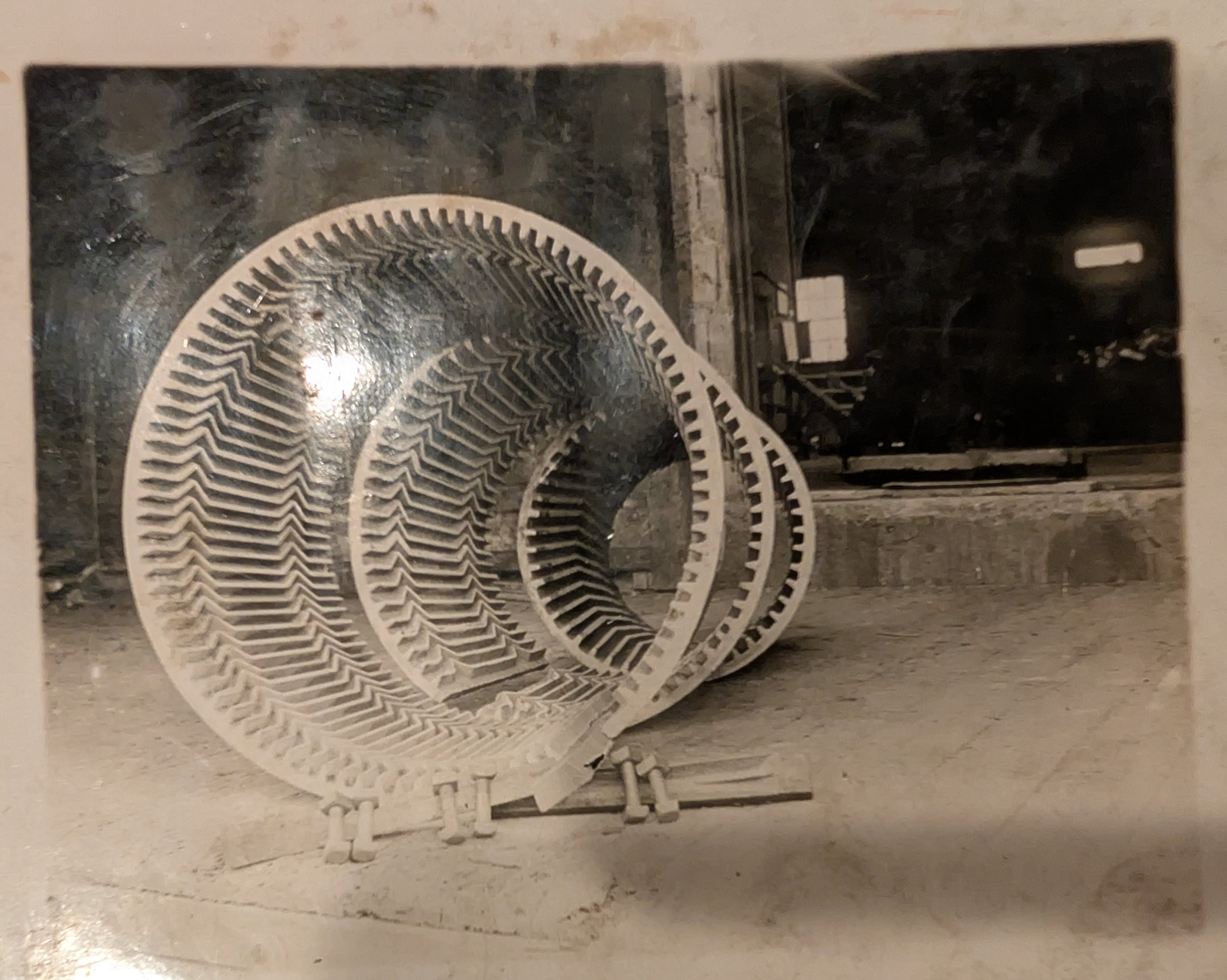
Their remedy was a set of all-metal fillings and shell linings for the Jordan. The first sets were made in July 1909 and patented in January 1910, according to the local press of the day. Otto, the business head, had the parts cast at the Marion Malleable Iron Works and sold them through agents in Chicago, until a falling-out with the agents persuaded the brothers to incorporate and sell for themselves. The decision paid off. By April 1912 more than 125 American paper mills used their parts, the first export had gone to the Thames Paper Company at Purfleet, in Essex, and patent applications were pending in England, Germany, and Canada. Mill owners tried to buy into the firm and move it elsewhere. Otto declined.
Demand soon outran the arrangement. In late 1913 the brothers leased a vacant gas plant at Eleventh Street and the Mississinewa River and began pouring their own iron, with orders arriving from as far away as Sweden. Within a few years they had moved to South Lincoln Boulevard, where the foundry stands today. By 1925 the Leader-Tribune could list customers from Maine to California and on to Cuba, Hawaii, New Zealand, and Australia, under a headline declaring that the company's history "reads like romance."
The romance had a practical streak. Amel, the president, worked in the shop as an ordinary hand. The firm held a monthly banquet for its workmen from which officers were barred, and it was one of the few in town that made no wage cut after World War I. By 1930 a company Social Union was meeting to discuss, among other things, honest workmanship against "pernicious trade practices."
The founders died in turn: Amel in 1941, Otto in 1945, and William some years later. By the mid-1960s the paper-mill trade that had sustained the firm was thinning. In November 1966 Charles Bahr, Amel's son, retired as president, and William M. "Bill" Jackson of Muncie took control. Jackson, who had a high school education and an appetite for running companies, later said the business had been close to closing when he bought it. Annual sales were about $110,000.
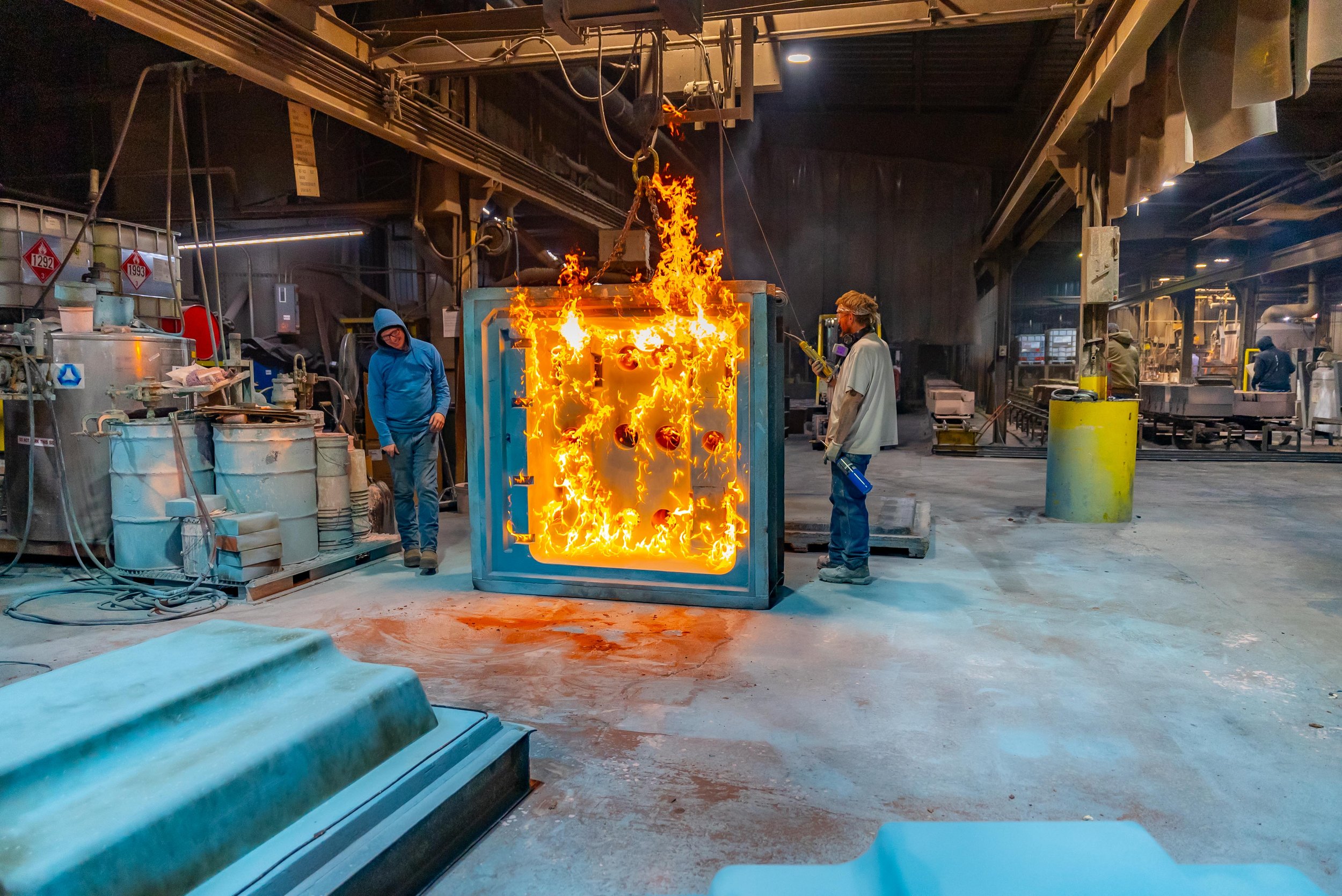
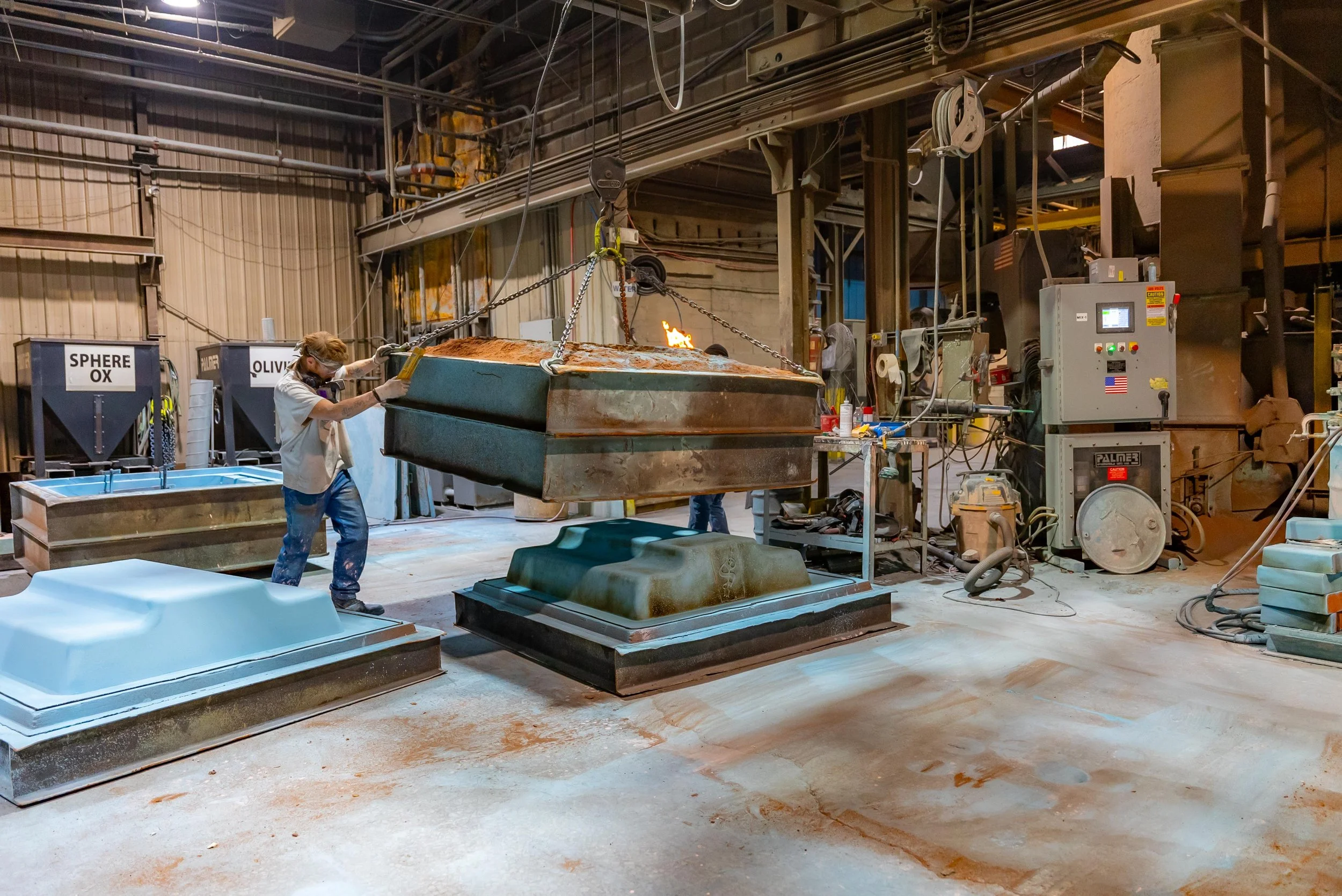
Jackson's turnaround rested on two ideas, one about people and one about sand. The first was gainsharing, a group incentive begun in 1969 that tied monthly bonuses to quality and output. By 2001 his son Jeff estimated that the firm had paid about $5 million in such bonuses, and Bill Jackson had built a consulting business, W.M. Jackson & Co., that sold the method to more than 1,000 companies. The second was lost-foam casting. In 1977 the Chronicle-Tribune, citing the editor of Modern Casting, reported that Bahr Brothers was the first foundry in America to tool up for repeat production using polystyrene foam patterns in unbonded sand. The technique drew foundrymen from nearly 30 states and interest from General Motors, Ford, Caterpillar, and John Deere.
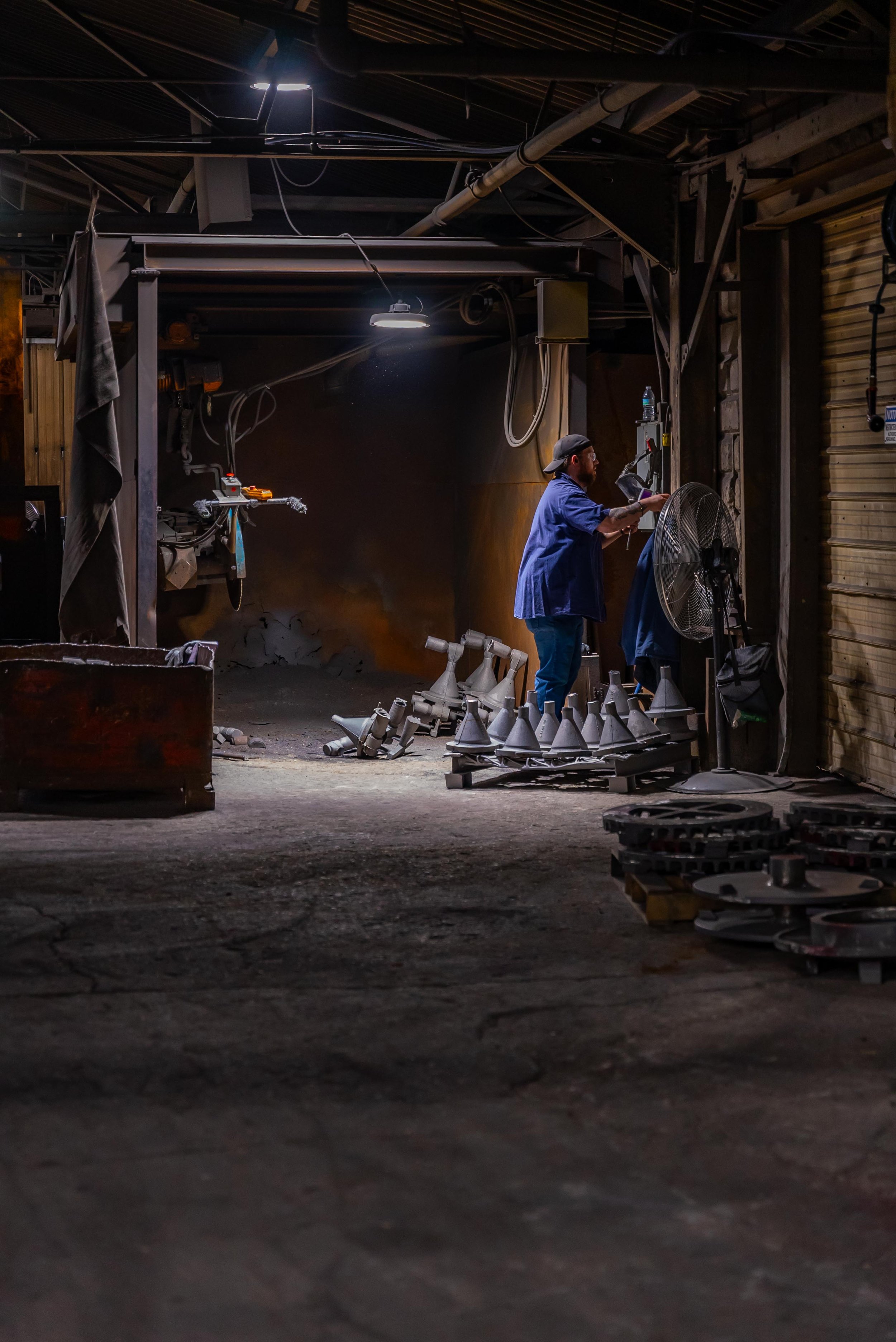
Diversification followed. The firm began casting for customers outside the paper industry in 1969, added steel, manganese, and stainless alloys in 1980, bought the paper-mill product line of a competing Portec division that same year, and later cast tooling for vegetable-oil processors and tire retreaders. In 1992 it recast the stair parts for the Grant County Courthouse, with the firm's name molded into the metal. It made its original Jordan parts until the early 2000s, then sold that product line, said Tim Street, now the company's president. Sales were projected at $2.25 million in 1986 and reached about $7 million by 2001, according to figures the company gave the local paper. A 2013 profile described a primarily steel foundry serving pulp and paper, aggregate, mining, aluminum smelting, and rail customers, with about a tenth of its castings shipped to Mexico, Canada, Europe, and India.
None of it was smooth. In 1982 Jeff Jackson was chasing a single order a day to stay open, with workers laid off and the plant on four-day weeks. By 1989 the hourly workforce had climbed back to 44 from a low of 18. American buyers who had moved castings overseas, he said, found that foreign foundries wanted orders of thousands when they needed 15 or 20, quickly. Paper groups such as Georgia-Pacific and Weyerhaeuser came back. Automation, he added, suited long runs: "When you've got 10 pieces to do, the dollars are just not there." Thirty-seven years later the company's home page makes much the same pitch to buyers of imported castings.
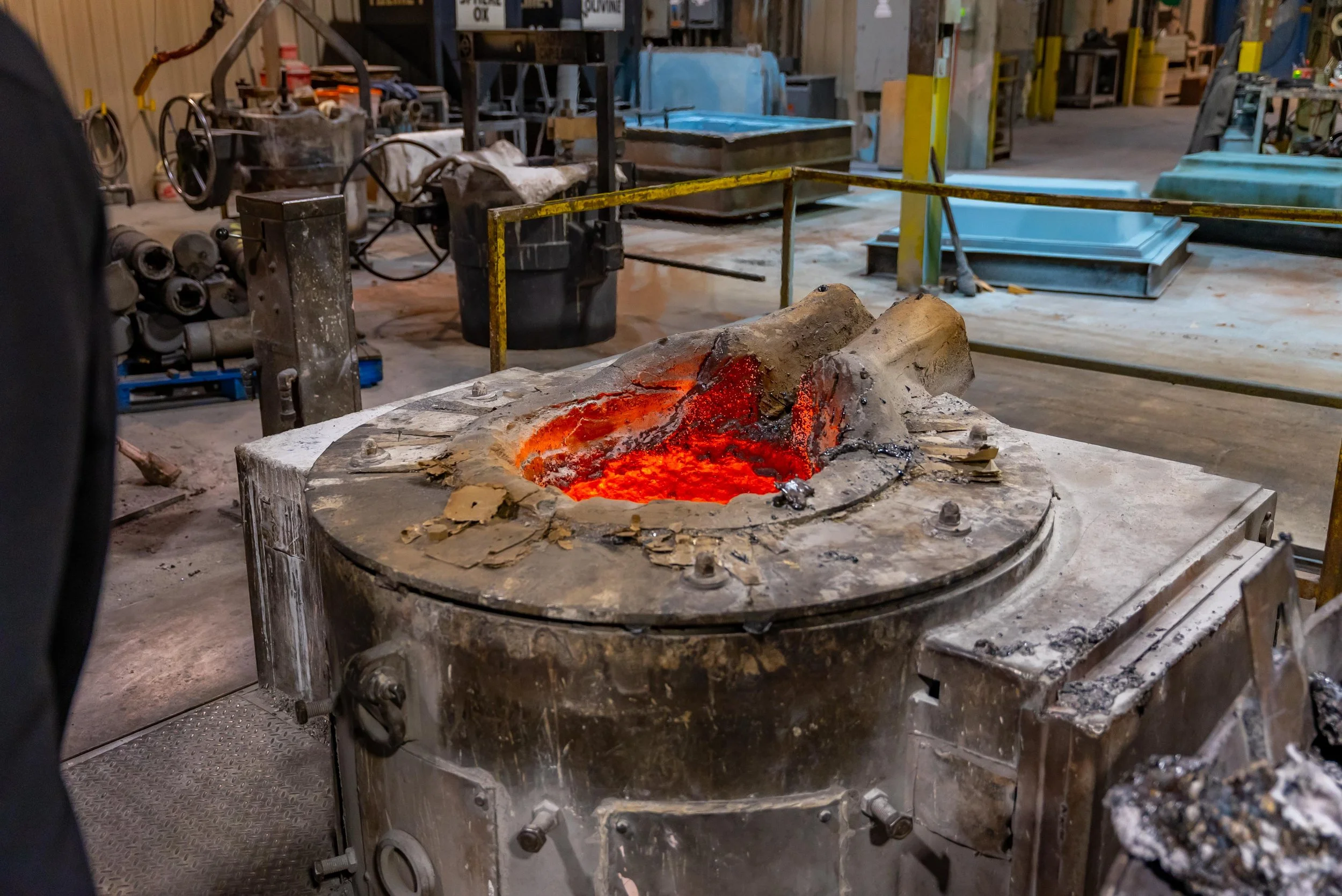
Reinvestment has been steady and, at times, publicly assisted. In 1993 the firm installed a thermal sand reclaimer costing more than $400,000, helped by a loan of about $190,000 from the Indiana Department of Commerce, which allowed it to recycle more than 90 percent of the sand it had been sending to landfill, some 26 tons a day. The state honored it that year with a Half-Century Business Award. Later, public records show a 2012 state air permit to add two electric induction furnaces, a 2013 rezoning for possible expansion, and a 2019 city tax abatement for a new break room, a crane, and a hydraulic press.
Then there is labor, the constraint that has never gone away. Alongside conventional hiring, Bahr Brothers has since the late 1990s also hired through the Grant County Jail's work-release program. In 2000 Jeff Jackson said those workers received the same profit-sharing as everyone else, in bonuses that had averaged more than 27 percent of hourly pay the year before and could stay on after release; one had risen to furnace operator. Street, then vice president, acknowledged in 2012 that most such hires do not last, but said some had become long-term employees and moved into management. The local paper's notices of 20-year service awards, for machinists, melt-department leads, and core makers, suggest that the people who stay, stay.
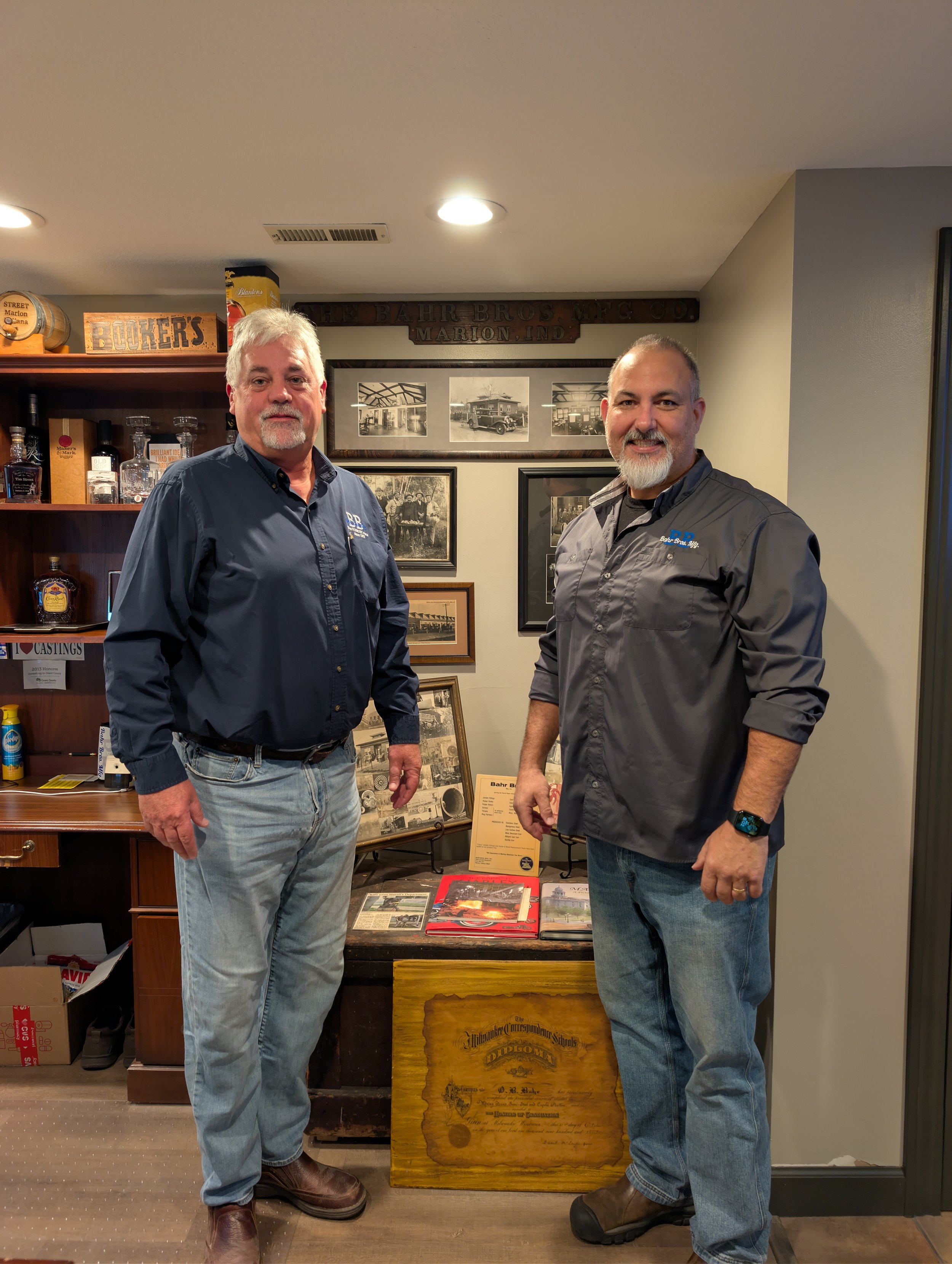
The Jacksons planned succession well in advance. Bill sold to Jeff in 1995. In 2009, Jeff told the Chronicle-Tribune a transition plan was already in place, naming his son-in-law Scott Bratcher and longtime employee Street, a longtime employee who started on third shift at 17 and never left. In 2012 Street became president and Bratcher vice president, with Jeff as chairman. In 2018, Street, Bratcher, and Jeff’s son, Blain Jackson, now the plant manager, bought the business from Jeff. The next generation is already at work: Will Bratcher, Scott's son, is the named contact on the foundry's state stormwater filings in 2020 and 2025.
Street does not romanticize the purchase. "Somebody said, 'Well, why did you buy it?'" he said. "Scott and I don't know anything else." Nor does he care for the old line about finding work you love and never working a day in your life. "Every job becomes a job at some point, no matter how much you love it," he said. "But I think we both put blood, sweat, and tears into the place, and it's just become ours."
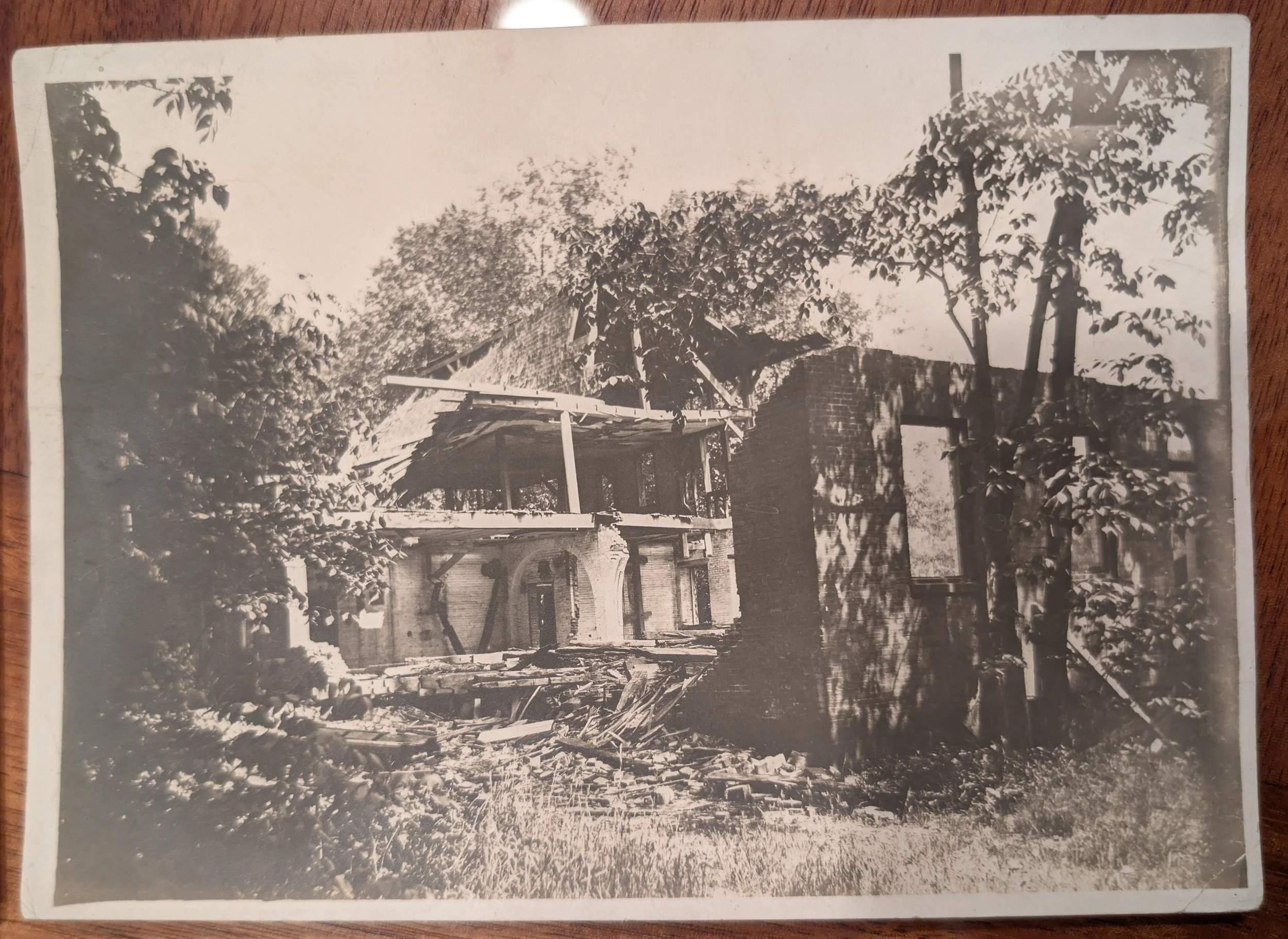
The past is kept within reach on South Lincoln Boulevard. Street can show a visitor the original company telephone, a section of the first crane rail, one of the original Jordan castings, and a license plate found when workers tore out a wall, which they assume came off one of the Model Ts in the old photographs. Those photographs include the original building after a flood and a horse-drawn load, and part of the foundry they show still stands. Old ledgers record purchases as small as tacks at a cent. "They itemized everything," Street said, "and the handwriting on them is just immaculate."
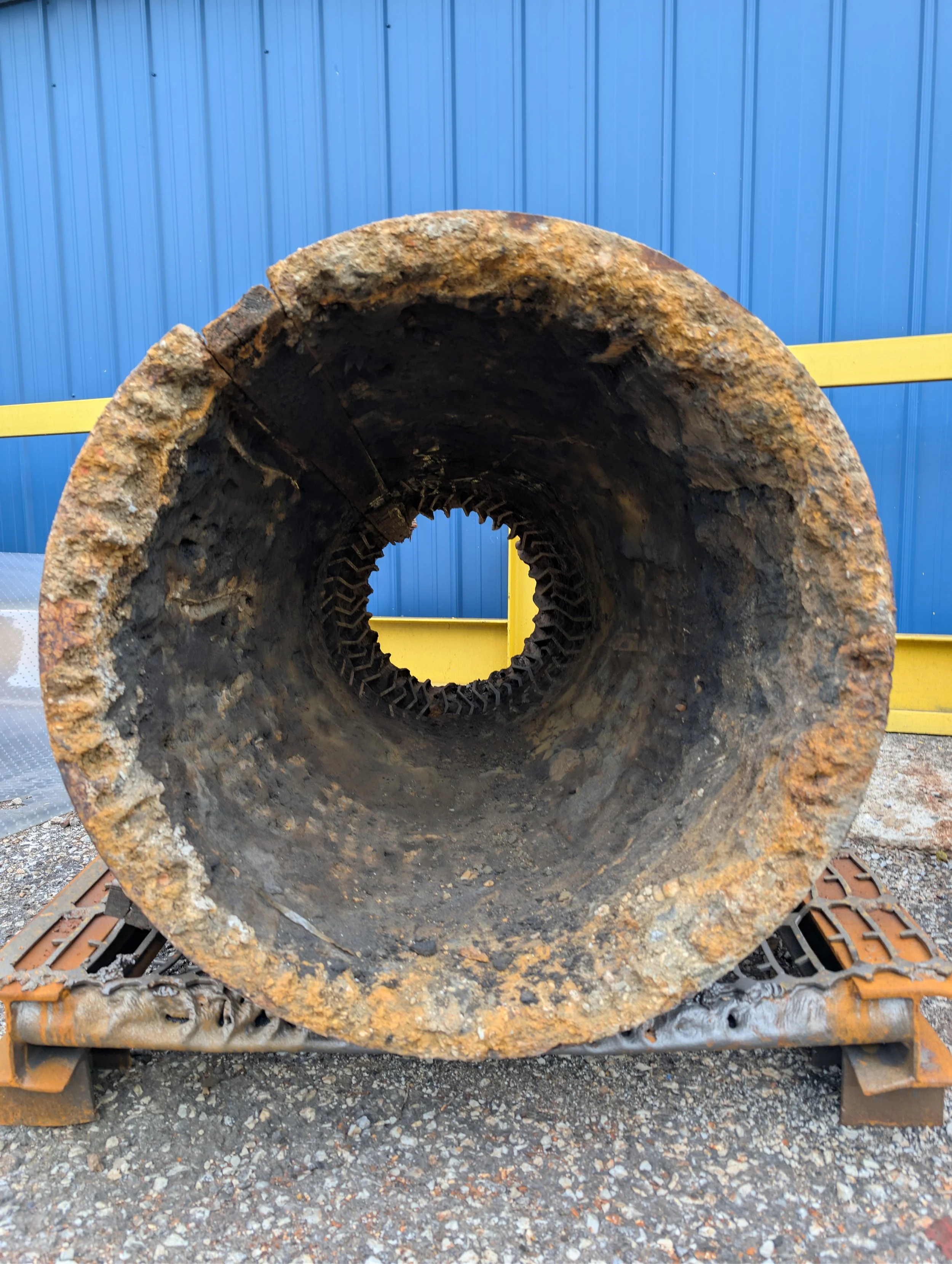
Some of the history is still turning up. When crews tore out the loading dock to pour new concrete and raise it six inches, they found a large Jordan buried beneath it. "They said, 'What is this?'" Street said. "I go, 'Oh my God.'" Jeff Jackson has asked to have it.
The industry around it has thinned. The number of American metalcasting plants fell from 6,150 in 1955 to about 1,750 today, according to Harry Moser of the Reshoring Initiative. Conditions are now kinder: the American Foundry Society expects casting sales to grow 8 percent in 2026, and manufacturing still accounts for 13.8 percent of jobs in Grant County, according to STATS Indiana. Bahr Brothers reported about 50 employees to the city in 2020.
The brothers' 1911 invention was a better part for a machine that turns rough fiber into something useful. It is a fair description of what the firm has done with its own history. After 117 years it still makes parts for paper mills, now one line among many, and it has kept the habits its founders started: make the part well, share the gains with the people who make it, and stay in Marion. Its castings ship to customers on several continents; the decisions are still made right here in Grant County on South Lincoln Boulevard, Marion.