
The Plate, the Cabinet, and the Cake
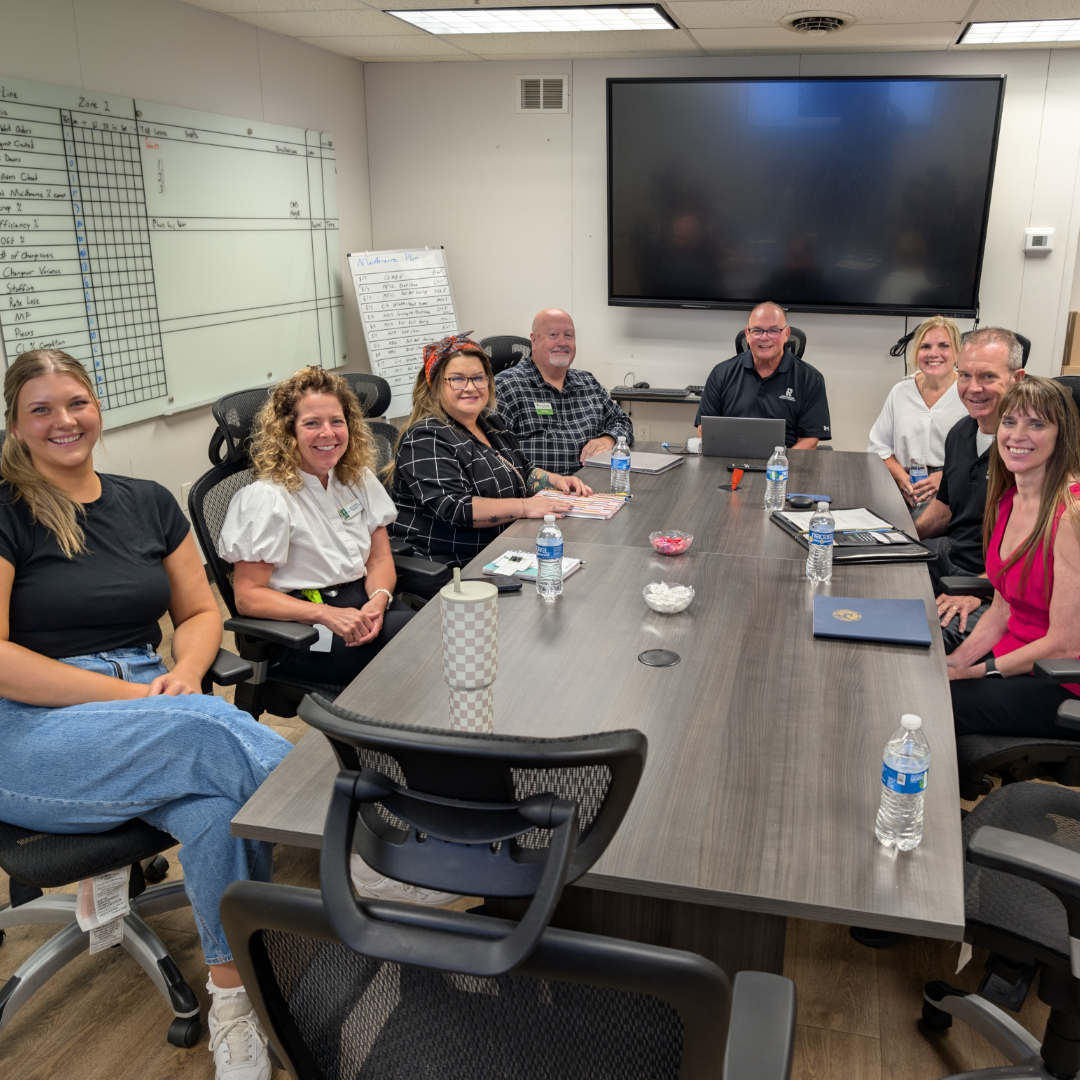
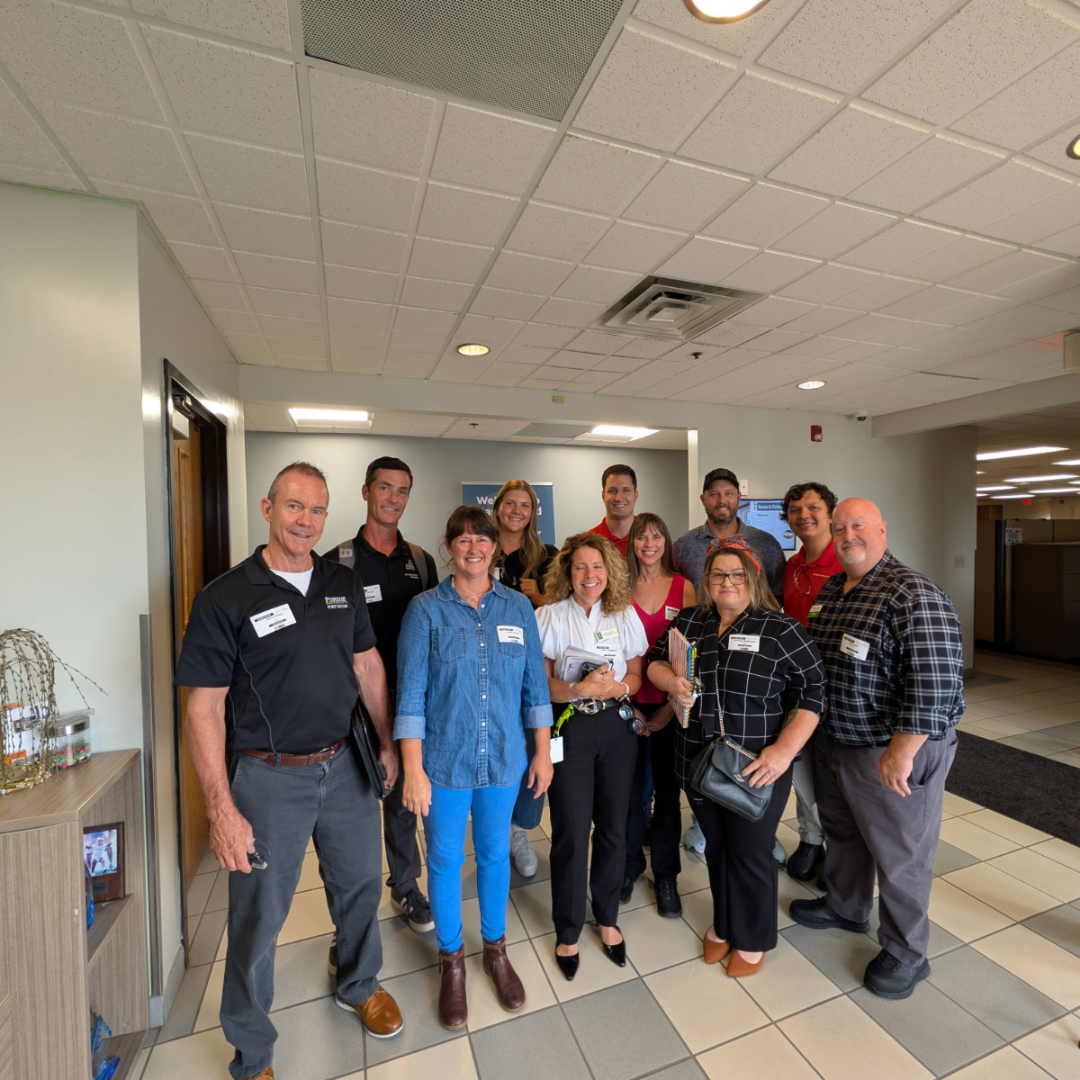
On Aug. 10 we spent a day on three factory floors: Huhtamaki in Marion in the morning, American Woodmark in Gas City after lunch and Cafe Valley in Marion to close. We traveled with Linda Walczak of the Indiana Economic Development Corporation, Jennifer Steigerwald of Northeast Indiana Works, Sean Ryan of Purdue University Fort Wayne, Jeff Frost of the Purdue Manufacturing Extension Partnership and Emily Summers of Ivy Tech Community College – Marion campus.
Between them the three plants employ roughly 1,450 people in Grant County, Indiana, and they make products with almost nothing in common: pressed paperboard plates, semi-custom kitchen cabinets, and baked goods. We had expected to spend the day discussing equipment, freight, and inventory. We spent it discussing people.
Huhtamaki: The Plate
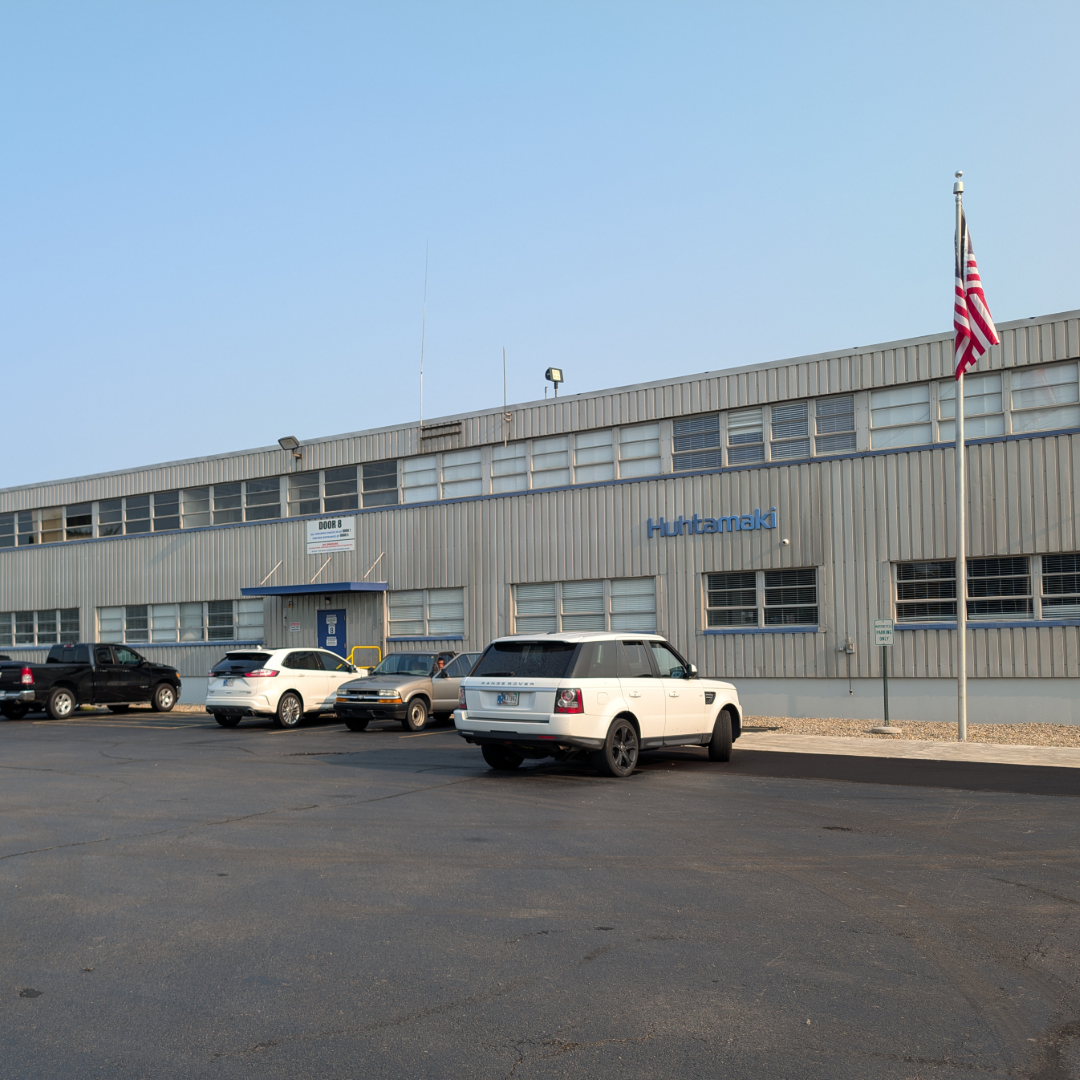
The plant on East 38th Street has been making things since 1963, under three names. It began as Boots Creek, became Winterfield, and was acquired by Huhtamaki in 2012. Next year marks 15 years under the current owner.
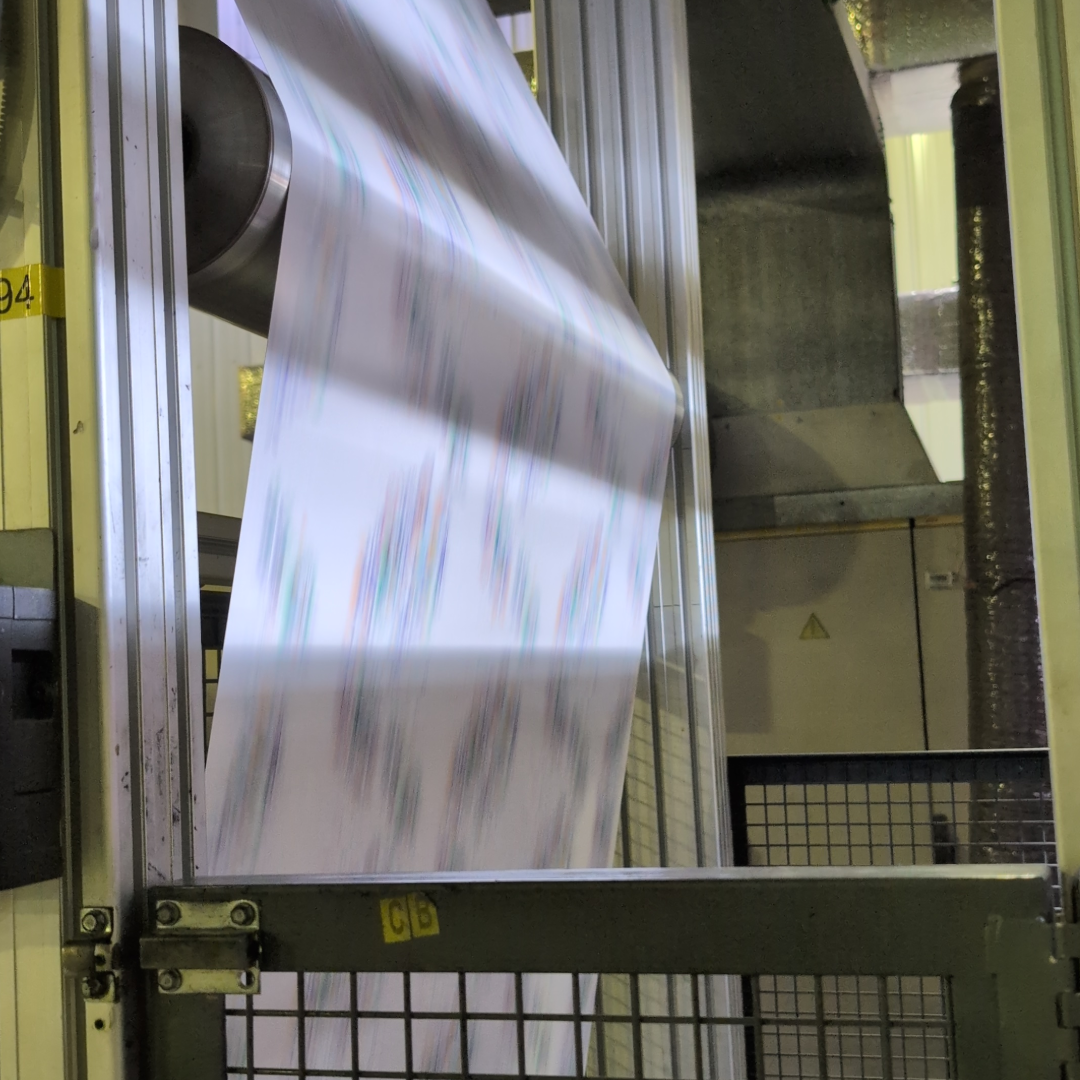
The scale is not apparent from the road. Thirty-four forming machines run seven days a week on 12-hour shifts, pausing only for nine holidays and a single floating day. Capacity is about 2.5 billion plates a year; last year the site produced roughly 2.35 billion of them and purposed 39,000 tons of paperboard. One printing press moves some 450 million feet of board annually, which by the reckoning of James Huller, the plant manager, would wrap the earth about three and a half times. Almost none of it carries the company’s own name. More than 99 percent of what leaves the building is private label, sold under the brands of grocery chains and national retailers.
Two details deserve wider notice. The first is that every one of those 34 forming machines was built by Peerless Machine and Tool, another Marion company. Huhtamaki runs another 31 Peerless machines in Batavia, Ohio, and 15 in Goodyear, Arizona. A Grant County plant runs on Grant County equipment, and so do its sister plants across the country.
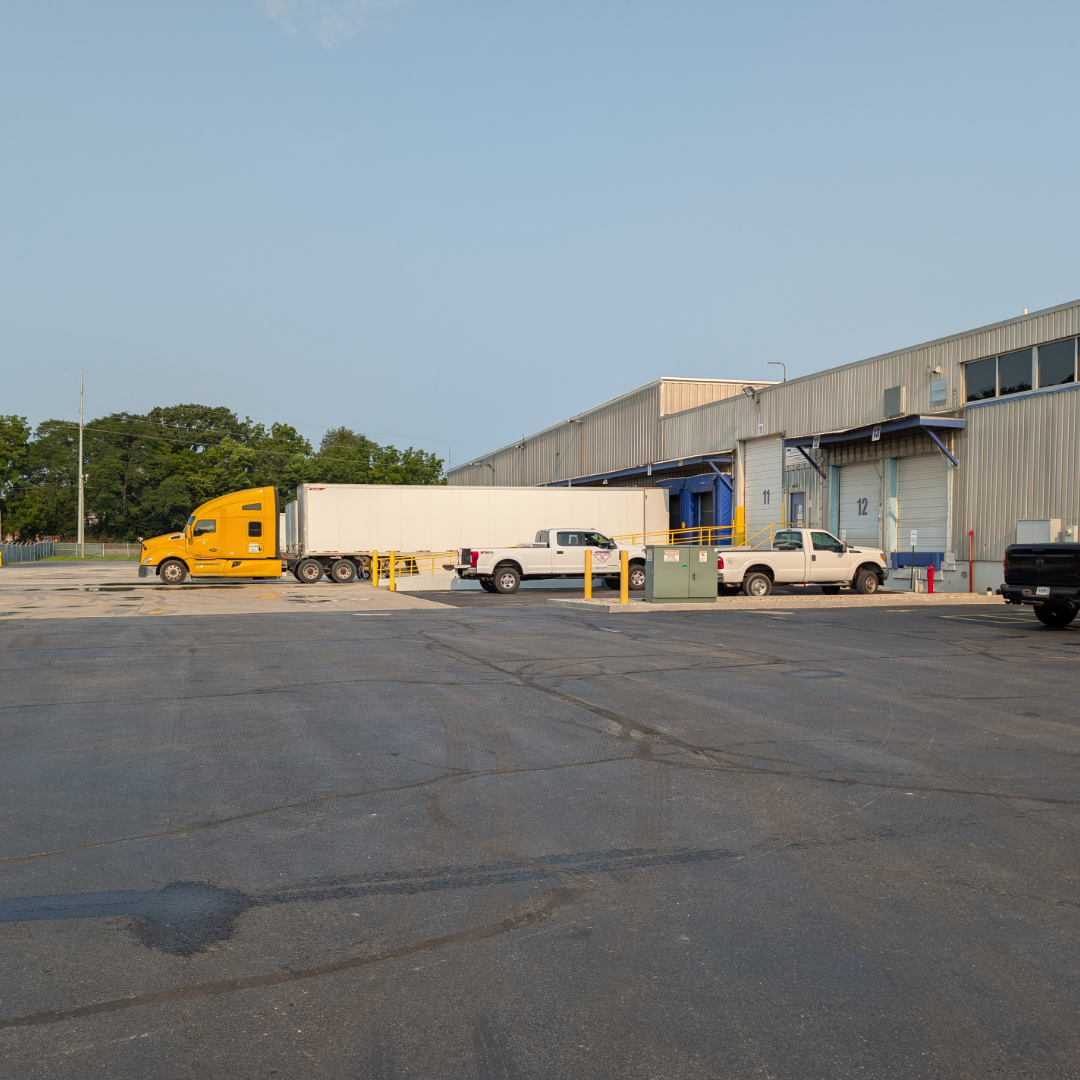
The second is the rail spur, completed in 2016 with help from the state. Roughly half the plant's inbound board now arrives by rail rather than by truck. That takes trucks off Grant County roads, insulates the plant from freight-rate swings and lowers the delivered cost of its single largest input. Linda Walczak, vice president for business retention and expansion at the Indiana Economic Development Corporation, worked on that project, and she walked the floor with us in August. A rail spur is the sort of investment that pays quietly for a decade and then keeps paying, which is also why it is the sort of investment that is difficult to get approved in the year it is proposed.
Two other numbers describe the same discipline. Since 2021 the site has sent nothing at all to landfill; what cannot be recycled is burned for energy at a facility in Indianapolis. Twice now the plant has run a full calendar year without a recordable safety incident. Neither result comes from a policy document. Both come from several hundred people doing the same thing the same way on every shift, which is harder than it sounds and is most of what operational excellence actually means.
The most instructive thing we heard, though, concerned 2020. When demand collapsed, the plant did not lay anyone off. Instead, it asked employees to sign up for backup positions across the facility, so that people who ran forming machines learned something of printing, of shipping, or of planning. When demand returned, other plants in the network could not staff their equipment. Marion could, and it took the work.
That is not a sentimental story. It is a margin story. Huller, who has spent four decades in paper and packaging and who arrived in Marion eight years ago as printing manager, put it plainly: the first instinct of most executives in a downturn is to cut people, and in his experience that instinct is usually wrong. Grant County has heard the opposite instinct exercised often enough over the past 40 years to appreciate the distinction.
American Woodmark: The Cabinet
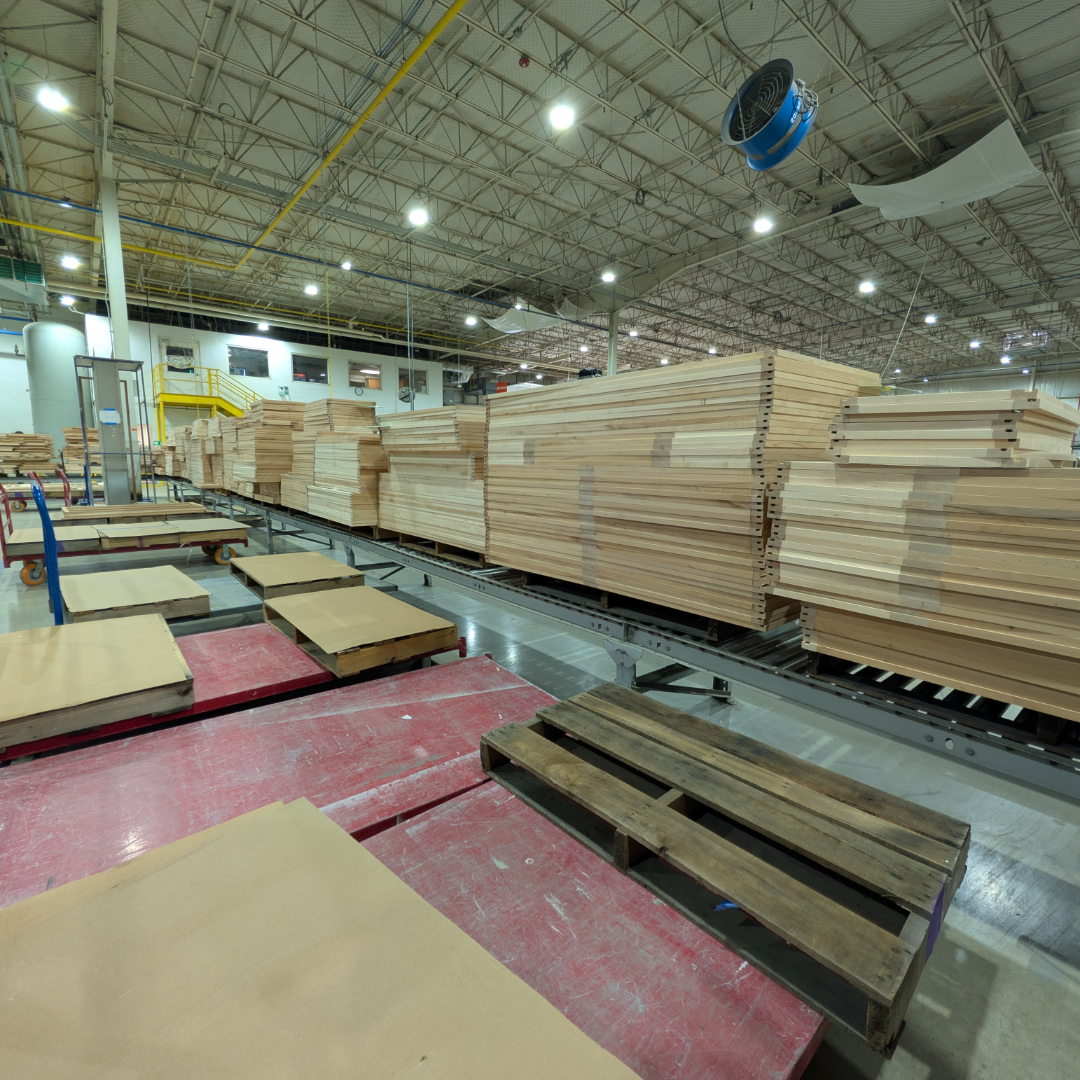
At our next stop in Gas City the numbers move faster. On the day we visited, American Woodmark was building about 2,400 cabinets and painting roughly 20,000 pieces. It runs twenty-one colors, and it runs every one of them every day, because it builds to order rather than to inventory. The paint is acid-catalyzed and dry in about 90 seconds. Cabinet edges are still painted by hand.
Only about 30 percent of what the finishing operation paints stays in Gas City for local assembly. The rest ships to sister plants in Georgia, Maryland and further west. Gas City is not merely a plant that happens to sit in Indiana; it is a specialist supplier to the rest of the network. Brad Hoselton, the plant controller, noted the consequence: the site is running well above the volume it budgeted for, because it has been efficient enough that the company moved additional work here. Absorbing that volume without a matching increase in labor is what drives per-unit cost down, and per-unit cost is the number by which a plant in a multi-site network is judged.
Every part carries a radio frequency identification chip (RFID). Years from now, a homeowner with a damaged door can be traced back through finishing to the whitewood plant that cut it. This is the kind of capability that sounds like bureaucracy but functions as customer service.
American Woodmark became a wholly owned subsidiary of MasterBrand on May 28, and the Gas City team is candid that a good deal of its attention is currently spent working out what that means. Integration is its own kind of labor.
The conversation that stayed with us was about knowledge. We raised a problem we encounter constantly among smaller manufacturers: the operator of 30 years who knows that on a humid day you turn a particular knob a quarter of a turn, and who has never written that down anywhere. The response from the plant’s quality and process engineering lead was a small masterclass. Finishing, he said, gets treated as an art because it involves paint. It is not an art. It is a science with a large number of variables, most of which can be identified, measured, and controlled. Humidity does not affect the paint; it affects the viscosity of the paint, which can be managed with line warmers. Four people at Gas City do nothing but process consistency, and color is checked numerically rather than by eye.
That is the answer to the tacit-knowledge problem, and it is expensive. A plant of 465 people can afford four process engineers. A plant of 40 cannot, which is precisely why we are pursuing shared training infrastructure for the county’s smaller manufacturers.
On workforce, Gas City was unusually direct. Its wages for maintenance and controls technicians are not competitive with some of its neighbors, and its leadership said so without hedging rather than let us leave with a tidier impression. What the plant offers instead is a four-day, 10-hour schedule for maintenance staff, introduced about 18 months ago and popular beyond what anyone will admit; a four-month internal leadership course taught by the plant’s own managers, with each participant paired with a mentor; and a promotion ladder that is more than rhetorical. Of 44 salaried employees, roughly 30 began as hourly workers. The assembly manager who led our tour started on the finishing floor 14 years ago.


Cafe Valley: The Cake
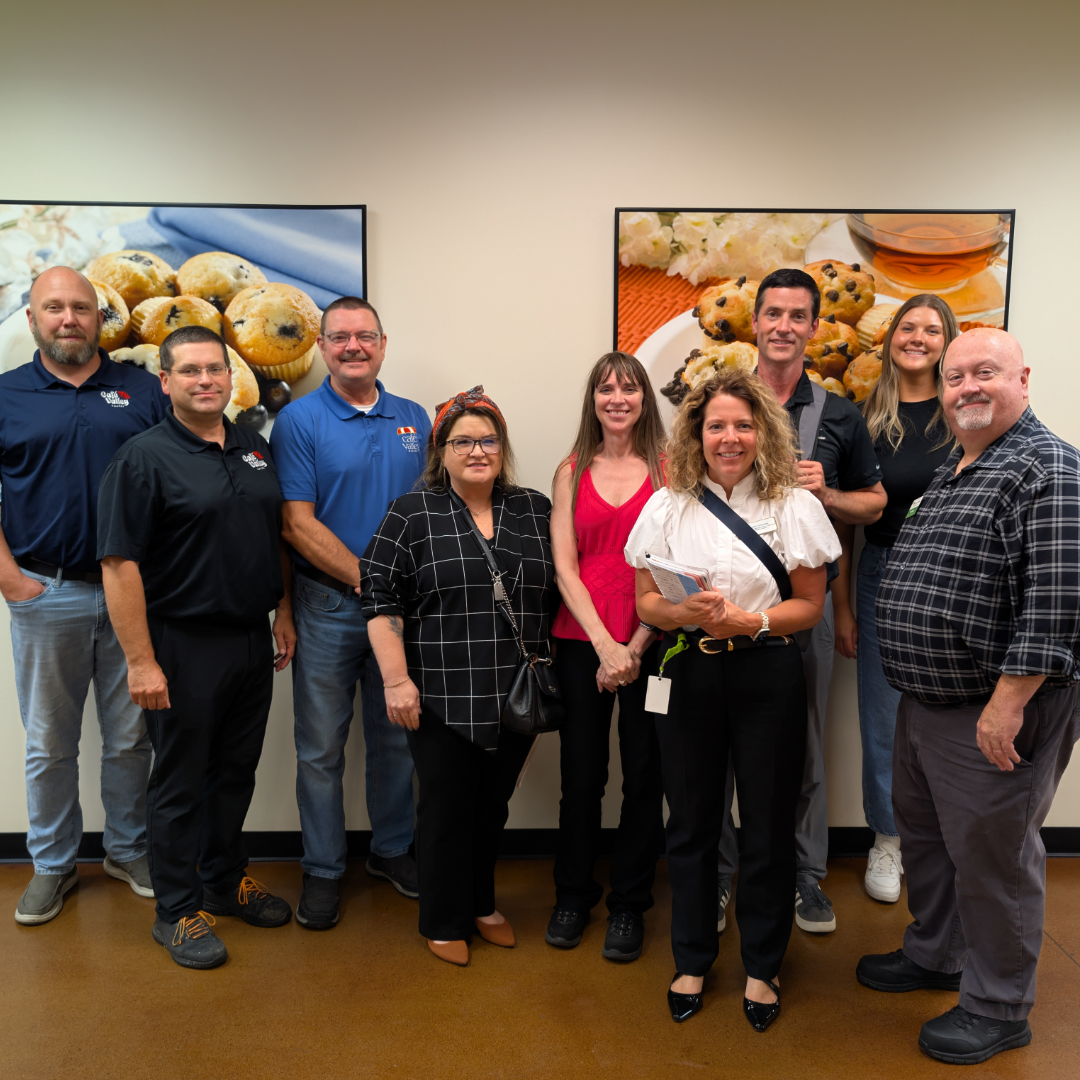
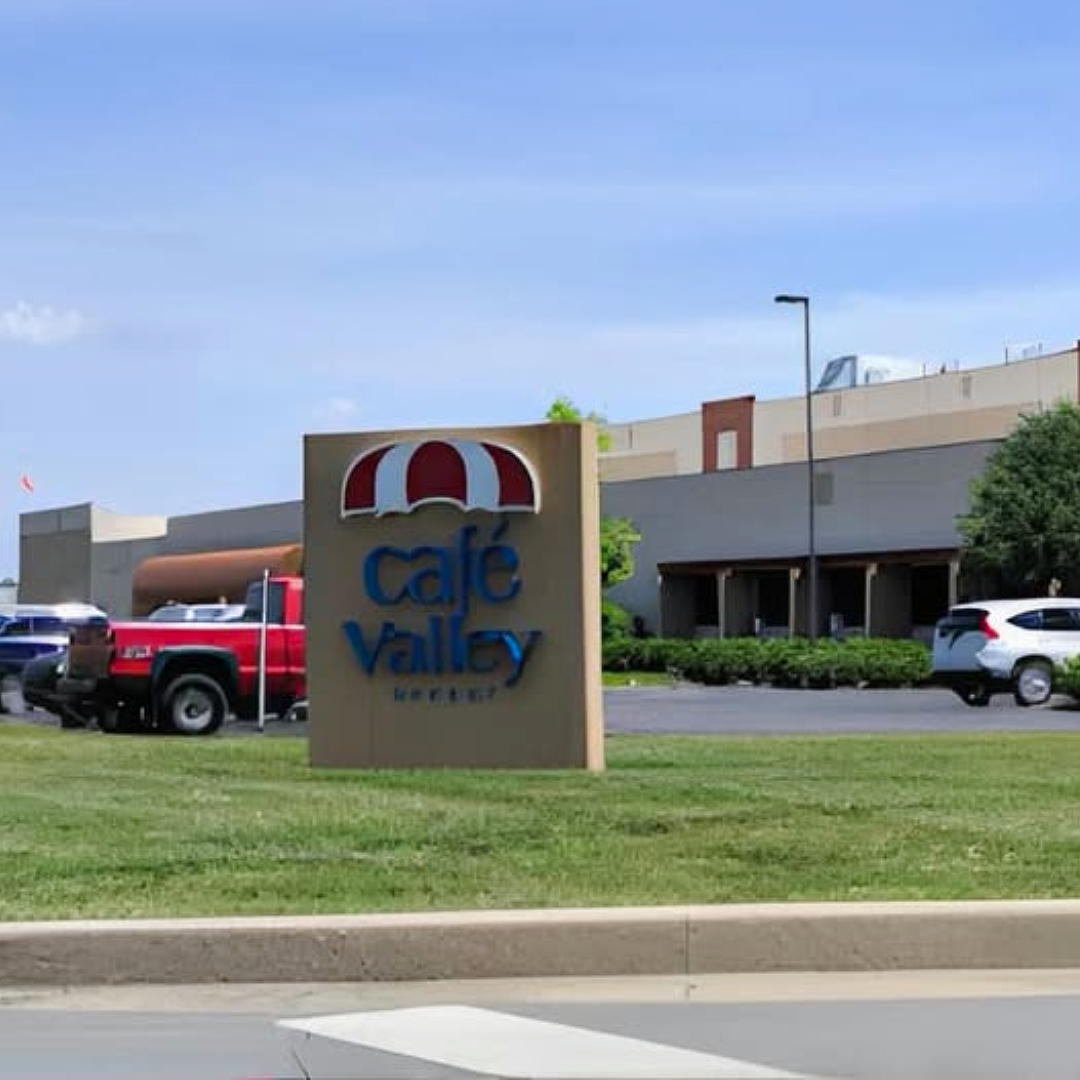
Cafe Valley operates two bakeries in the United States. One is in Phoenix, Arizona. The other, built in 2014 to serve the eastern half of the country, is on South Adams Street in Marion, Indiana, and with 796 employees it is the largest of the three plants we visited.
It was also the most forthcoming about its difficulties, which we take as a compliment to the of our Business Retention and Expansion (BRE) visit rather than a reflection on the business. Retention is the plant’s acknowledged priority, and it has been improving for several years against a problem that predates the current leadership.
Allen Reed, who took over operations at the Marion plant eight months ago, described a straightforward objective: that Cafe Valley should become the employer of choice in Grant County. The work under way toward it is unglamorous and specific. Every new hire receives a welcome box, branded "Baking a Difference," carrying their name and the equipment they need on their first day. A Baker Buddy program pairs newcomers with experienced staff. Candidates tour the production floor before they accept an offer, on the reasonable theory that someone who has seen the job is likelier to stay in it. Orientation has been rebuilt. Second and third shifts carry a two-dollar hourly premium.
Some of the work is more inventive. The plant studied video of its own lines to understand the reaching motions operators repeat thousands of times a shift, and it has built adjustable leaning posts out of PVC pipe so that workers have something to brace against. The prototypes are on the floor now. It is a reminder that ergonomics, done seriously, is a retention program.
And some of it reaches past the fence line. Cafe Valley is a second-chance employer and hires from local recovery housing. Its leadership asked us for two specific things. The first is pro bono legal help, so that employees carrying old non-violent traffic offenses can recover a driver’s license and stop depending on someone else for a ride to work. The second is financial literacy training, because a wage only works if the person earning it knows how to make it last past Wednesday. PNC Bank, which already brings pizza to every orientation, has offered to help with the second, and Ivy Tech is bringing an expungement event to Marion, which speaks to the first. These are not extravagant requests. They are the sort of thing a county can actually organize.
One Constraint, Three Answers
Three plants, three products, and three quite different operating cultures. And, in every conference room, the same conversation.
None of the three is constrained by orders. None is constrained by equipment, though all three are investing in it. Each is constrained by the supply of people willing to show up, to stay, and to take on more responsibility. Huhtamaki has spent years unable to fill its last several positions. American Woodmark has been looking for a controls technician for months. Cafe Valley is fighting a retention problem that it has already substantially reduced and intends to reduce further.
Their answers differ instructively. Huhtamaki invented new roles so that people on a repetitive line had somewhere to go. American Woodmark built a promotion ladder and teaches its own leadership course. Cafe Valley is rebuilding the first 90 days of the employment relationship, on the correct assumption that this is where it is usually lost.
What Was Actually on the Table
The purpose of these visits is not ceremonial. Each employer left with specific, mostly free resources that it had not previously been using. We are listing them here because if three of the county’s most sophisticated manufacturers did not know about them, others may not either.
| Partner | What they told us they can do |
|---|---|
| Northeast Indiana Works | WorkKeys skills assessments. Power Up Indiana, the state upskilling reimbursement program described below. The federal bonding program, a no-cost insurance policy that lets an employer take a chance on a candidate with a record. The Work Opportunity Tax Credit, which at least one of our three largest employers was not claiming. Jennifer Steigerwald is the business services manager; Bridget Smith is the Grant County business services representative. |
| Ivy Tech Community College | A career fair in November. An advanced manufacturing team leader and supervisor program now rolling out. Financial literacy and FAFSA workshops. An expungement event coming to Marion. |
| Purdue University Fort Wayne | Free job postings through Handshake, the university job board, which the Career Development Center then promotes to students, plus inclusion in notices for job fairs, Talent Tuesdays and Career Connections. Capstone projects: 30 to 40 a year across engineering, polytechnic, computer science and business, in which a company hands students a real problem. More often than not, at least one student on each team is hired by the sponsor. Sean Ryan directs the Office of Engagement; Michelle Kuhlhorst is the campus contact for hiring, internships and cooperative education. |
| Purdue MEP | Lean and Six Sigma training, value stream mapping, quality systems, ISO internal auditing, leadership development and cybersecurity support, delivered through Purdue as Indiana’s Manufacturing Extension Partnership. Courses can be brought into a plant, taken online or attended in public sessions on the Purdue Fort Wayne campus, and they pair with the reimbursement program described below. Jeff Frost handles scheduling and delivery. |
| INvets | A pipeline connecting separating service members to Indiana employers, for skilled trades and supervisory roles alike. |
| GCEGC “Growth Council” | Introductions, grant support and a quarterly manufacturers roundtable that we have revived and that every employer in this article is invited to. |
Source: Partner presentations delivered during site visits, August 10, 2026.
One Program Worth a Second Look
One item on that list changed while this was being written. Power Up Indiana is a state upskilling reimbursement program from the State of Indiana and the Office of Commerce, administered through the Department of Workforce Development. It reimburses employers who train the people already on the payroll rather than hire around them.
Until August, the program required a substantial wage increase on completion of training, a threshold high enough that our region had not been able to place it with a single employer. Messaging from Gov. Mike Braun’s administration has now lowered the required increase to 10 percent, maintained for two consecutive quarters. The minimum wage at the start of training remains $20.35 an hour; the employee must be a current jobholder, and the training must be completed with an outcome the business judges satisfactory.
What counts as upskilling is broad: industry-recognized technical training credentials, cross-training and reskilling, leadership development and apprenticeships. Employers begin with a short intake form at powerup.dwd.in.gov, after which the state follows up with the incentive structure and program toolkit. Joining does not require seeking reimbursement at all.
That single change moves Power Up from theoretically useful to practically usable for a good number of Grant County employers, and it pairs directly with the training offered at Ivy Tech’s Marion campus and with the Purdue MEP catalog above. If you looked at these programs earlier in the year and concluded it would not work for your operation, look again.
The Invitation
We will keep doing this. If you run a business in Grant County and would like an hour with the state, the college, the university, and the workforce system in the same room, we will arrange it. There is no cost and no obligation.
The Grant County Economic Growth Council is located at 315 S. Adams St., Marion, Indiana, and can be contacted at communications@grantcounty.com, 765-662-0650, or through grantcounty.com.
Resources
Café Valley. Café Valley, Inc., 2026, www.cafevalley.com/.
"Gas City Plant." American Woodmark, American Woodmark Corporation, 2026, americanwoodmark.com/our-story/locations/gas-city-plant.
Indiana Economic Development Corporation. State of Indiana, iedc.in.gov/.
"Marion Campus." Ivy Tech Community College, 2026, www.ivytech.edu/locations/marion/.
"Marion, IN." Huhtamaki North America, www.huhtamaki.com/en-us/north-america/about-us/locations/marion-in/.
Masterbrand, Inc. “Masterbrand and American Woodmark Successfully Complete Merger Transaction.” Business Wire, 28 May 2026, www.businesswire.com/news/home/20260528600025/en/MasterBrand-and-American-Woodmark-Successfully-Complete-Merger-Transaction.
Northeast Indiana Works. 2026, neinworks.org/.
Purdue Manufacturing Extension Partnership. Purdue University, mep.purdue.edu/.
Purdue University Fort Wayne. 2026, www.pfw.edu/.